Filed this cycle
Farmers Market Vendors You Should Know by Name
The people behind the tables.
Words by Angela Smith
Life, Work, Family & Local Discovery Correspondent · Millennial lens
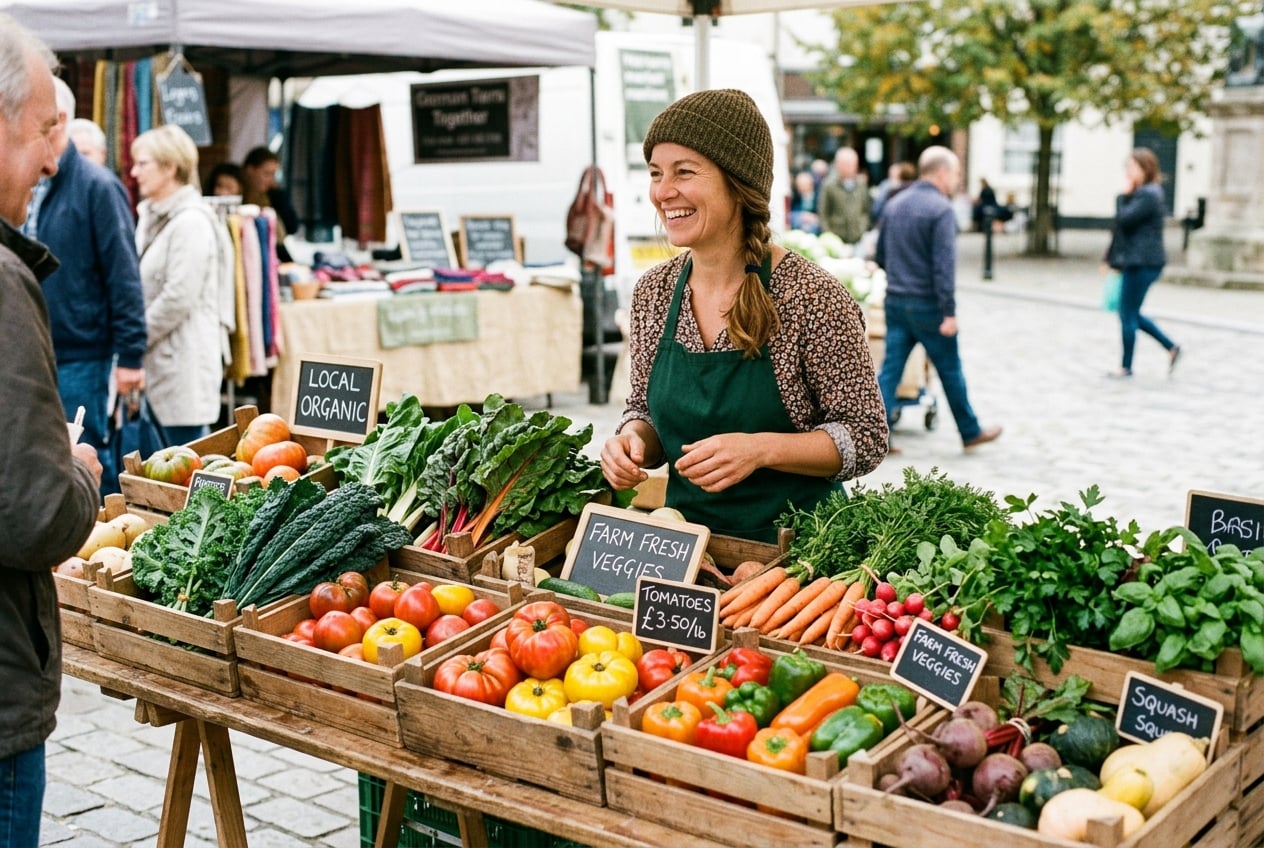
Photograph · Anna LIFE Photo Desk · composed by Sierra Grace
By the time the sun is high over [NEEDS: exact farmers market location in Anna], the market has already done one of its quiet jobs. It has turned a parking lot or patch of pavement into a place where people say each other’s names.
That matters more than we sometimes admit. In a fast-growing town, it is easy to become someone who waves from the driveway, orders dinner on an app, and means to get out more next weekend. A farmers market interrupts that drift. You walk up for tomatoes, bread, honey, soap, eggs, jam, flowers, or whatever is in season, and you leave knowing who made it, packed it, picked it, baked it, or hauled it there before breakfast.
The vendors are the real shape of the morning. There is usually the produce table, where dirt still shows in the creases of a box and someone can tell you the difference between what was picked yesterday and what needs two more days on the counter. There is the baker, keeping one eye on the pastry boxes so the wind does not lift the lids. There is the honey seller, used to answering the same good questions from parents with sticky-handed kids. There is often a soap or candle maker, a flower grower, a farm family loading coolers out of the truck bed, someone pouring coffee, someone explaining a salsa that looks harmless until you get it home.
These are not anonymous transactions. A market vendor remembers that you liked the sourdough last month. They tell you peaches are running late this year if that is true. They warn you that the jalapenos are hotter than they look. They ask how your daughter’s first week at school went because you mentioned it once, standing there with a canvas bag and a stroller wheel stuck on uneven asphalt.
For families, this kind of place does practical work. It gives children a script for public life that is still worth teaching: look up, say good morning, ask how something is grown, wait your turn, thank the person who hands you the carton. For adults, it offers something just as useful. It lets us practice being regulars somewhere. Not influencers, not shoppers in a hurry, not profiles in an app. Just neighbors who know where to find the good okra, or the breakfast tacos, or the bouquet that will make the kitchen table look less tired by Sunday afternoon.
If you want to belong to a market, the simplest way is also the oldest. Go more than once. Bring cash if [NEEDS: whether vendors typically accept cash/cards in Anna market] and a bag that can handle a melon. Ask one real question. What is best this week. How do you cook this. Did the rain help. Then listen. People who make and grow things usually have useful answers, and most of them can tell in two seconds whether you are asking to be polite or asking because you plan to go home and actually slice, roast, scramble, simmer, arrange, or share what you bought.
The good vendors teach a town how to notice itself. Not in a grand way. In the ordinary way. A table of zucchini tells you what the weather has been doing. A low stock of eggs tells you how quickly the morning moved. A line at one booth tells you who has earned trust, one market at a time.
We should know these people by name because they are already helping hold together a local life that can otherwise feel scattered. They wake up early enough to meet us in the heat, unload the truck, smooth the tablecloth, make change, answer questions, and do it again next week if enough of us come back. The least we can do is ask who they are, remember it, and return.
About this byline. Angela Smith is a correspondent on the Anna LIFE Generational Press Desk, writing with a millennial lens perspective and published by TownSquare App Press with human editorial review. Stories are grounded in real Anna, Texas life; always confirm time-sensitive details (dates, rates, deadlines) with the relevant office before acting.