Filed this cycle
Thrift, Trade, Repeat: Anna Circular Fashion Scene
Style that keeps dollars and clothes in town.
Words by Emily Diaz
Culture, Creators, Opportunity & Right Now Correspondent · Gen Z lens
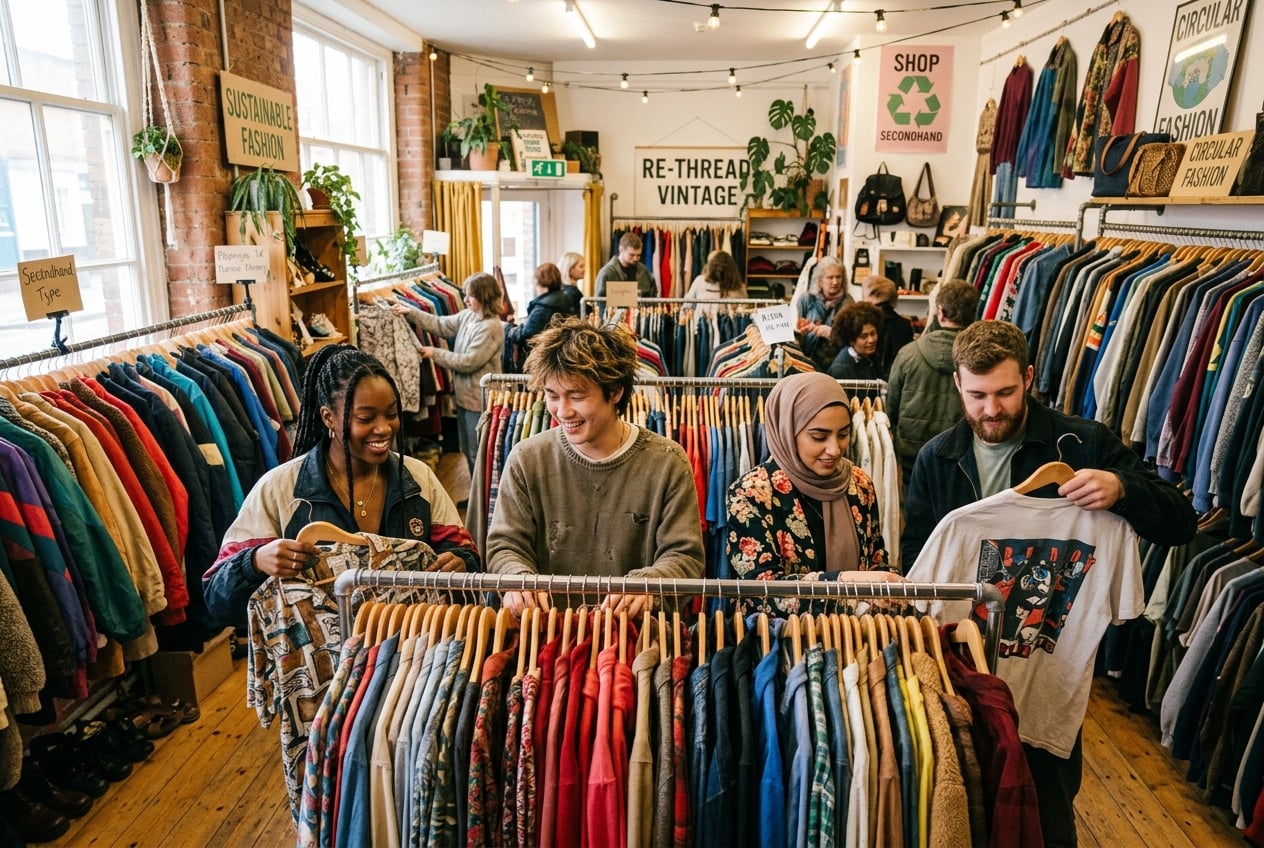
Photograph · Anna LIFE Photo Desk · composed by Sierra Grace
In a fast-growing town, style can get flattened fast. The same big boxes, the same two-day shipping, the same stack of trend pieces that look tired after three washes. Circular fashion asks a simpler question: what if clothes stayed in Anna a little longer?
That can mean thrift stores, resale racks, closet swaps, hand-me-down chains, Facebook Marketplace pickups in a gas station parking lot, or a group chat where somebody says they are done with a pair of boots and three people answer in under a minute. It is not glamorous on paper. In real life, it is where affordability and personality meet.
For young people especially, circular fashion is not just an aesthetic choice. It is math. A special event outfit, work clothes for a first job, jeans that fit after a growth spurt, sneakers that still have life in them. Buying new every time adds up fast. Rewearing, trading, and buying secondhand can turn style into something less punishing. It also keeps money moving closer to home when the seller is local, the shop is local, or the trade happens between neighbors instead of a warehouse and a porch.
There is a creative side to it too. The best dressed people in any town are rarely the ones wearing the most expensive thing in the room. They are the ones who know how to combine a found jacket, a basic tee, a chain from somebody’s aunt, and shoes with a little dust on them. Circular fashion leaves room for that kind of authorship. A shirt with a past has more texture than one pulled from plastic wrap.
In Anna, the scene is still more patchwork than infrastructure. There are likely people already doing this every week without calling it a scene at all: parents passing along kids’ clothes, teens reselling online, church groups collecting donations, neighbors posting household clean-outs, students hunting for affordable fits before photos, interviews, or dances. What is missing is not interest. It is visibility and easy meeting points.
A healthy circular fashion culture usually needs a few basic things: a place to browse, a place to trade, and a place to learn simple repair. Hem a pant leg. Replace a button. Patch a knee cleanly enough that the fix becomes part of the look. That kind of knowledge stretches the life of clothes in a way that feels almost radical now.
It also creates social space, which Anna’s younger residents talk about wanting in all kinds of forms. Not every gathering has to center on buying something brand new. A swap event in a community room, a school fundraiser with a resale component, a pop-up rack at a market, a mending table at a library program. Clothes can be the excuse people need to actually meet each other.
The appeal is practical, but it is also emotional. Secondhand shopping slows the pace down. You look harder. You make choices with your hands instead of your thumbs. You notice fabric, weight, wear, smell, construction. You ask where something came from. You imagine where it goes next.
That is a different relationship to style than the scroll trains us to have. Less disposal. Less sameness. More local memory stitched into ordinary things.
If Anna wants to keep more dollars in town, circular fashion is one small, believable place to start. Not as a moral lecture. Not as a branding exercise. Just as a town deciding that clothes still have value after the first owner is done with them. [NEEDS: examples of Anna-area thrift/resale/swap options or upcoming local events to ground this piece with verified specifics]
About this byline. Emily Diaz is a correspondent on the Anna LIFE Generational Press Desk, writing with a gen z lens perspective and published by TownSquare App Press with human editorial review. Stories are grounded in real Anna, Texas life; always confirm time-sensitive details (dates, rates, deadlines) with the relevant office before acting.