Filed this cycle
The Question Wall: What Anna's Youngest Residents Ask
The future, spelled out in crayon.
Words by Jenny Taylor
Future Anna, Learning & Family Correspondent · Gen Alpha / future-family lens
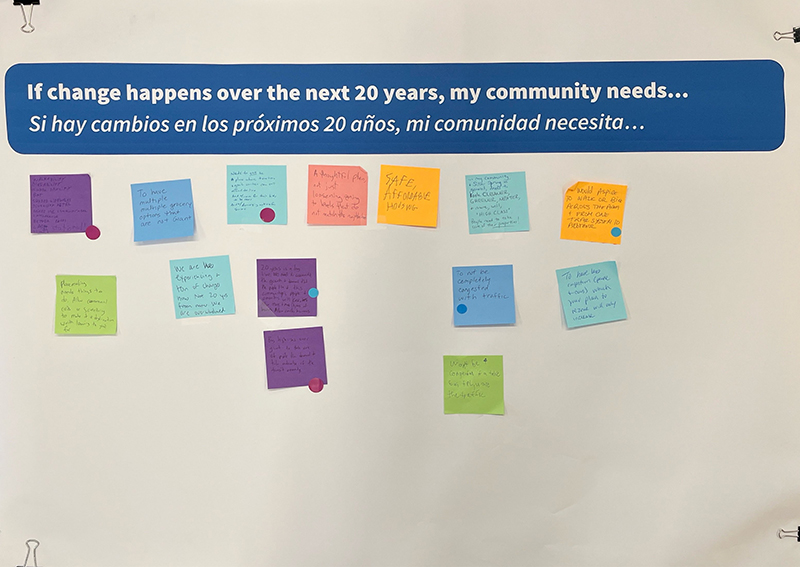
Photograph · Anna LIFE Photo Desk · composed by Sierra Grace
At kid height, a wall works differently. It is less a surface than a dare. Draw here. Tell the truth here. Use the fat green marker. Press hard.
In a family space, the evidence accumulates fast: backward letters, planets with rings too big for physics, a house with four windows and a purple dog, one careful question in block print. Why is the sky pink sometimes? Another in red crayon, all caps. CAN BUGS SLEEP? A smaller hand adds a practical concern under that. Do they have beds.
Adults tend to sort children’s questions into cute and serious, as if the first kind does not contain the second. But spend ten minutes near a roll of butcher paper taped to a wall and the categories fall apart. A child asks where rain goes after the street dries. Another asks why some people have no home. One wants to know if robots can feel bad when people are mean to them. One asks whether the creek by the trail remembers the storm.
Those are not the polished questions of a school survey. They arrive half-spelled, sideways, with a sun drawn in the corner. They come from booster seats and bunk beds, from back yards where the sprinkler leaves a muddy arc, from car rides down [NEEDS: a specific Anna road or street name] when a child notices a field scraped flat and asks what will go there. They come after soccer practice, at library craft tables, near playground shade structures hot enough to radiate through a T-shirt in July.
The form matters. A question wall is slow technology. It does not rank answers or ask families to download anything. It waits. It gives a public shape to private wondering. A child who cannot yet read sees that questions themselves belong in the room. A child who can read discovers that other people are asking strange, vivid things too. That can be its own kind of education.
In a fast-growing place, this feels useful. Children notice change before they can explain it. They see the orange fencing, the survey stakes, the new turn lane, the patch of prairie gone to packed dirt. They hear adults talk in the kitchen about traffic, school rezoning, rent, practice schedules, internet filters, water bottles, grandparent pickups. Then they walk up to the wall and translate all of it into the exact scale of childhood. Will there still be frogs here? Why is that truck working at night? If my school gets bigger will my teacher know my name?
Some of the best questions are really design prompts. Can the park have more shade. Why is there no place for big kids and little kids together. Can we make the bathrooms easier to find. Others are moral tests disguised as simple observations. Why do people laugh when someone talks different. Why can’t everyone have snacks. When do grown-ups have to tell the truth.
A town that makes room for those questions is doing more than entertaining children. It is collecting early warning signs and early hopes. Kids are often the first to say that a crossing feels scary, that a bathroom is too dark, that a sign makes no sense, that a field where they used to find grasshoppers has gone quiet. They are also the first to propose impossible, useful things: a tunnel for turtles, a bench just for reading, a swing where a parent and child can sit together, a class where grandparents teach fixing things.
The crayon marks matter because they are local. Not generic childhood. This heat. This wind. This patch of North Texas clay on the soles of sneakers. The questions belong to children growing up where the horizon still has room in it, even as the map keeps changing.
If you stand by the wall long enough, you can watch a family approach. The adult reads. The child reaches. The cap comes off the marker with a soft pop. Then, for one quiet second, you can almost see the future forming at the wrist before it touches the paper: not a prediction, just a question made visible.
About this byline. Jenny Taylor is a correspondent on the Anna LIFE Generational Press Desk, writing with a gen alpha / future-family lens perspective and published by TownSquare App Press with human editorial review. Stories are grounded in real Anna, Texas life; always confirm time-sensitive details (dates, rates, deadlines) with the relevant office before acting.