Filed this cycle
What the 1913 Rail Depot Can Teach New Arrivals
A short history lesson with a long civic point.
Words by Marion James
Front Porch, Legacy & Service Correspondent · Baby Boomer lens
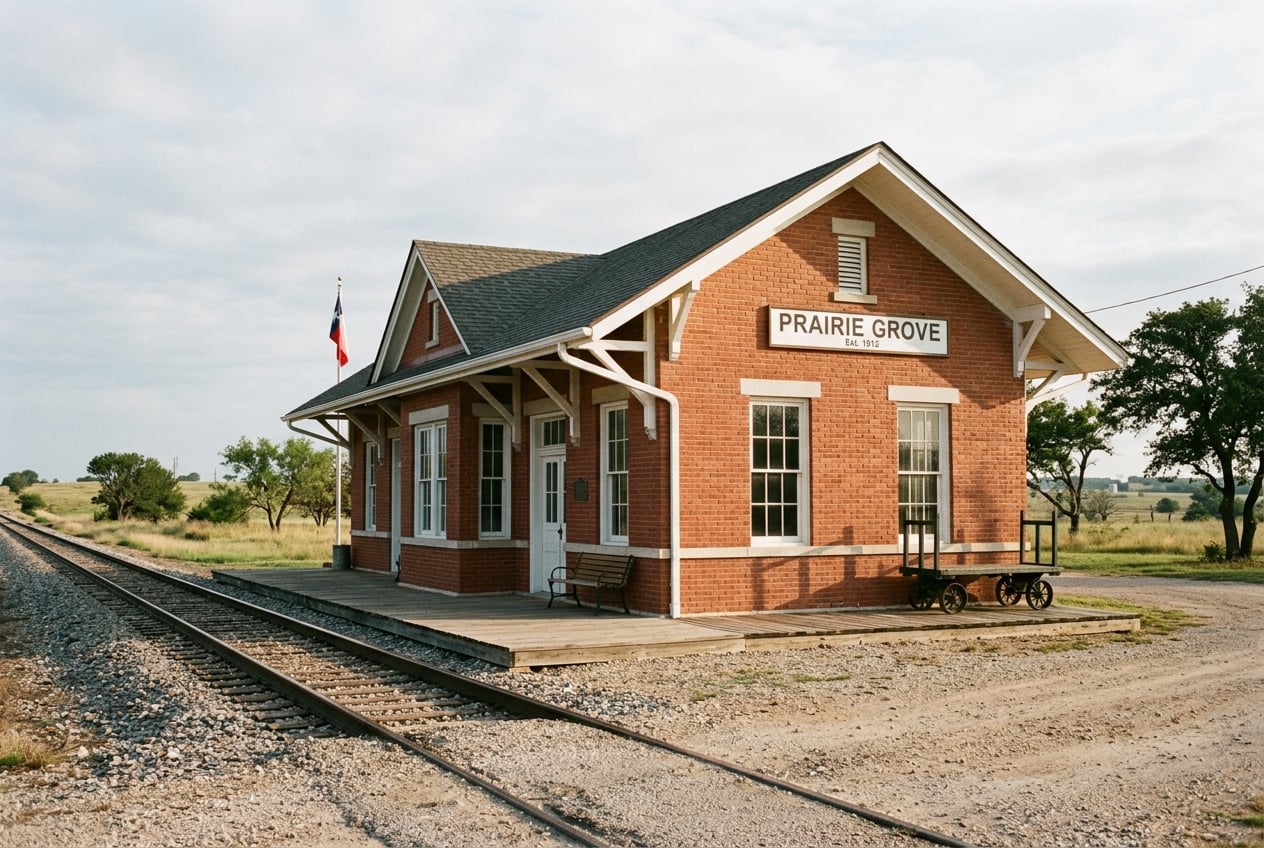
Photograph · Anna LIFE Photo Desk · composed by Sierra Grace
On a hot afternoon, a depot platform tells the truth about a town. You can learn it from the boards underfoot, from the shade line moving a few inches at a time, from the way people come and go with purpose. A rail depot is never only about trains. It is about waiting together. It is about whether a place believes it has a future worth building toward.
Anna’s [NEEDS: official name of the 1913 rail depot or how it is commonly referred to in local historical materials] belongs to that older Texas language of timber, freight, dust, and schedules. Built in 1913, it stood at the point where daily life met the wider world. Produce left. Goods arrived. News traveled with passengers, conductors, and drummers carrying sample cases. The depot taught a practical lesson many small towns knew by heart: if you are connected, you have a chance. If you are cut off, even good land and hardworking people can feel very far away.
That is worth remembering now, when Anna is growing fast enough that some mornings a familiar corner looks different by supper. New rooftops go up. Traffic thickens on roads that used to hold a gentler pace. Families arrive carrying cardboard boxes, school registration papers, and a private hope that they have chosen well. Growth can make old-timers feel as if the town is slipping from their hands. It can make newcomers feel they have stepped into a story already in progress, with no one handing them the first pages.
A depot is useful here because it was built for arrivals. Not just for the people getting off the train, but for the people already there, deciding what kind of welcome this place would offer. A town reveals itself in small courtesies before it ever reveals itself in policy. Somebody points the way. Somebody helps with a trunk. Somebody says which road floods, which church bell you can hear at dusk, where to stand when the north wind comes hard across open ground.
That is not nostalgia. It is civic behavior.
The people who built Anna did not have the luxury of thinking community would take care of itself. They had to make one. They made it through trade, work, worship, argument, and mutual need. They made it in heat and in cold, in good years and lean ones. The depot was one of the places where those obligations became visible. You met people unlike yourself there. You dealt with delays there. You learned patience there. You understood, sooner or later, that your own plans were tied to other people’s reliability.
For new arrivals, the lesson is plain enough. A town is not a bundle of services you purchase and evaluate. It is a set of relationships you enter. If you came here for good schools, a safer street, a bit of yard for the children, that is understandable. Most people have always come for some version of that same hope. But after the boxes are unpacked, the deeper question begins. Will you know your neighbor’s name? Will you learn what stood here before your subdivision? Will you show up when the town asks for patience, attention, or help?
For those who have been here longer, the depot offers a lesson too. Every hometown was once new to somebody. Nearly every family story starts with an arrival. The measure of a place is not whether it changes. It will. The measure is whether it keeps its manners, its memory, and its willingness to make room without surrendering its character.
If the old depot still has anything to say, it says this in a steady voice: connection is not automatic. It is built, maintained, and sometimes repaired after hard weather. [NEEDS: current status/use/ownership of the 1913 depot, if it still stands] matters for that reason. Not simply as a relic to admire, but as a reminder that Anna has long been a place where people met the future by meeting one another first.
About this byline. Marion James is a correspondent on the Anna LIFE Generational Press Desk, writing with a baby boomer lens perspective and published by TownSquare App Press with human editorial review. Stories are grounded in real Anna, Texas life; always confirm time-sensitive details (dates, rates, deadlines) with the relevant office before acting.